The Call of the Mountain – Journey to Everest Base Camp and to Yourself
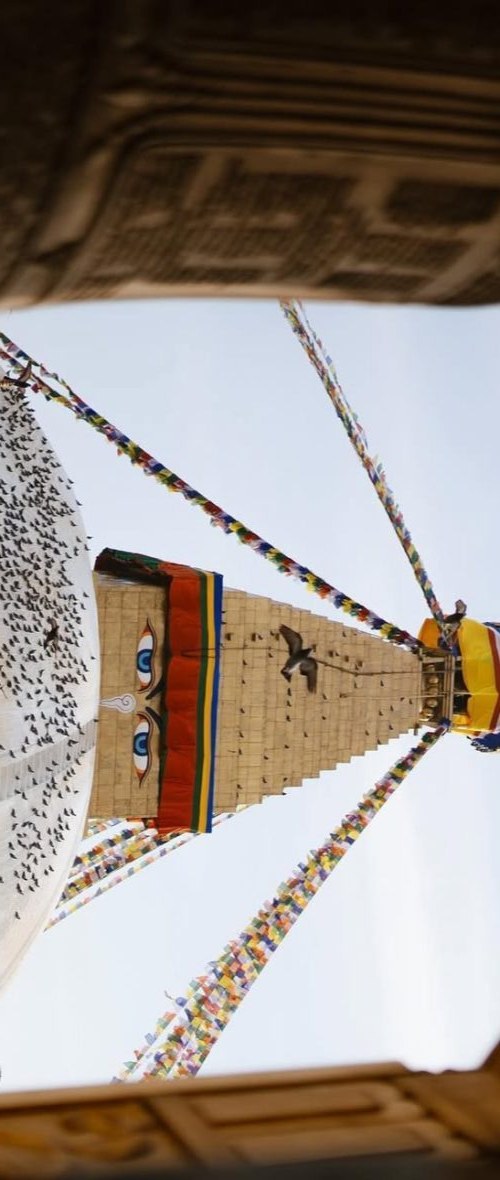
A few thoughts on our trip to Nepal. Mainly because this is the last week you can still sign up for it. Several of our friends, passengers, and acquaintances said they would join us next year, as this trip is so exciting and has been a long-cherished dream of theirs. And I looked on with wide eyes, realizing that this is not a trip we will repeat. Because this is truly not just a trip, not a camp.
It means so much to me that we're setting off, and that we arrive halfway, even though we haven't even started, that I once again picked up a pen (keyboard) to write about what Nepal, Everest, means.
We're setting off for the third time. The first time we were supposed to go, Covid hit, and the second time I had an accident and tore my ankle ligament. The third time, years later, I organized it myself so that all my experiences would lead to even more experiences.
We, humans, tend to constantly idealize the past, yet it was just as much a state of being then as this present moment is now. You were just as dissatisfied, complete, unhappy, happy, lonely, loving, and you never felt that you were at the top, that this was the peak of your life. Life flows, sometimes up, sometimes down, but you must learn that the depths cannot drag you down to where there is no air and everything is dark, and at the top, high above, you cannot get stuck in the illusion that everything is perfect. Yes, the clichéd golden mean exists, where the journey itself is the destination, and this becomes the peak.
It's a physical bucket list item for me; I've been preparing for this since I was a little girl, and I've long felt that this is a tremendous inner opportunity, the ascent of “THE MOUNTAIN”, where both my body and mind are put to the test, and where I can finally reach a height from which I can look down upon myself, our sufferings, and the world. Five years ago, I wouldn't have embarked on this journey like this, but today I do all this without suffering, with pure awareness and detachment.
We are heading to EBC, into the mountains, into the Khumbu Valley, among the world's highest mountain ranges, during the physical climb, where the mind also “ascends”. Many people write, and many personal accounts state, that during the EBC trek, one transforms internally: the fatigue, the lack of high-altitude air, the endless steps, the lonely nights, the Sherpa culture, the monasteries, prayer flags, stupas – all evoke inner work and insight.
It's not uncommon for people there to experience a "liberated perspective": they see their old fears, attachments, and the chaos of the world below, but they no longer get stuck in them, because the altitude changes their perspective.
However, during the journey, our own body and mind become the teacher: at every step, we can observe the desire to always rush things with the principle of “when will I get there?”. We confront the fear of not always believing enough in ourselves with the thought of “will I be able to handle the altitude?”. Anger may appear when we are unable to externally observe the cause-and-effect process and realize that it's okay to feel pain and to rest when we are tired. And it is a liberating journey when we can gradually let these go.
This is precisely the path where mindfulness (appamāda) drives away heedlessness, and from there on, you are asoko (free from suffering).
Moreover, the Khumbu region is deeply Buddhist: Sherpa communities, monasteries (e.g., Tengboche, Thame, Khunde), prayer flags, Mani stones, morning chants – all remind us of the Dhamma and strongly draw attention to what is ours. Many trekkers report that while meditating there, sitting next to a stupa, or just looking at the mountains, they realize something profound: impermanence (anicca – every step passes), suffering (dukkha – it is present even in the pain of the body), and no-self (anattā – who is it that 'goes up'?).
This journey promises exactly that: to approach yourself and look at the world from there with empathy, but freely. This trek is not just a physical challenge, but a practice: a live vipassanā, mettā, and appamāda training.
This is a huge undertaking, yes, but that's exactly why it's an opportunity for awakening. Many who have been there say afterwards: "Base Camp isn't the peak, but what changed within me is."
That's why we set out. Just this once. I already feel this calling, this is the working of Dhamma itself.
I wish you to set off if you feel the call. Believe in your own strength. I wish you much strength, awareness, and peace for your journey; the mountaintop awaits you, but the real view opens up within.
If you feel the call now, join us, as we are embarking on a journey with a fantastic team that is guaranteed to change everything.
P.S.: Here I leave my own translation from the Dhammapada, which has always focused on this Path within me.
Just as one looking down from a mountain peak sees those living below, so the awakened sage, when abandoning carelessness and reaching the tower of wisdom, sees the suffering, ignorant masses – but remains without suffering himself.
Namo Buddhaya, Reni