Bali – More than a destination: Why do we keep coming back?
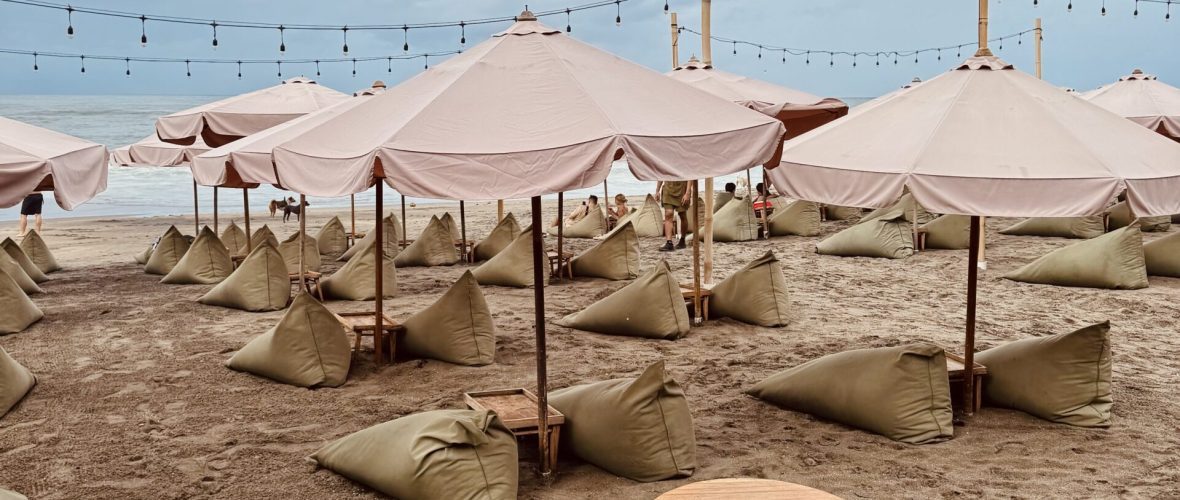
Bali has changed, that's undeniable. In recent years, infrastructure has developed, prices have risen, and digital nomads, influencers, and mass tourism have completely transformed many places.
Is it still worth traveling to Bali?
It always depends on what you are looking for. If you ask me, the answer is clear: yes.
I have spent most of the past few years here, and for me, Bali is the place where everything falls into place. For those who only see the surface, mass tourism, traffic, bustling beach clubs, Bali might not be the same anymore. But if you can look beyond the noise, if you are open to discovering deeper connections with nature, people, and yourself, then Bali is one of the most special places in the world.
In the past 2 years, nearly 60 people have traveled with me here to explore Bali and the surrounding islands. Each of them came for a different reason: some were searching for themselves, some for new challenges, a new community, and some simply wanted to enjoy the special energy this island offers.
Bali has changed, but its essence has not been lost. If you know what you're looking for, you'll find it.
For me, Bali is not about mass tourism. When I am here and when I organize camps, we are not looking for places where tourists queue for a "spiritual experience."
We do not visit Hindu ceremonies where 'negative energy is expelled from us,' because this is not part of the Hindu tradition. Karma is not something that can be washed away or nullified by a ritual. Every action in life leaves an imprint, and development stems from awareness, self-knowledge, and genuine experiences, not from a pre-arranged ceremony. During the camps, we go to places where nature is more untouched, where it is possible to truly be present. Experiences await that are not pre-planned 'spiritual programs,' but genuine encounters with Bali and with ourselves.
Spiritual experiences are not sold through GetYourGuide.
Balinese Hinduism indeed holds a rich spiritual and ritualistic world, but 'shamanic healing' and 'spiritual cleansing' have become commercial products. I give the example of the sacred spring of Tirta Empul. An ancient, religiously significant place where locals perform purifying rituals with true devotion for themselves, for their faith, and not as a performance for a tourist group. My problem is not that someone wants to experience Bali from a spiritual perspective, but that many are selling the illusion of authenticity, not the true culture.
That is why I consider it important that during our camps, we do not engage in these spiritual “experiences” created by mass tourism. Because true experience is not a pre-written program, but when you truly arrive at a place, pay attention, connect, and understand that spirituality is not a product, but a path. In reality, the cleansing of karma cannot happen solely through a ritual, as karma is the consequence of our actions, intentions, and states of consciousness. A superficial purification experience (such as a sacred bath) can only be truly effective if it is accompanied by internal change. Tirta Empul has undoubtedly become a tourist attraction, being one of Bali's most famous “spiritual” sites, where hundreds of tourists participate in the “ritual” daily.
Balinese Hinduism, however, is much more ritualistic and community-based, so for them, bathing in the sacred spring is also a communal ceremony that helps them connect with divine energy. In Hindu philosophy, the way to resolve karma is primarily through self-reflection, right actions (dharma), and a conscious lifestyle, but the role of rituals is to help create focus on this and support inner work.
So, the question many ask: is it worth traveling to Bali, or is it already overrun with tourists?
The question is valid. Bali is now one of the centers of spiritual tourism, but how can one distinguish authentic experience from commercially driven illusion production?
Of course, I could also say, travel with us, and you'll see! But based on my own experiences, I'm now guiding you around; travel with us, with others, or even alone, but find the Bali that speaks to you.
- If you can, don't travel to Bali for just one week. Jet lag will take a day, and by the time you truly arrive, you'll already have to leave.
- Especially don't pay a tour organizer hundreds of thousands of forints for it if you don't know what you're getting.
- Don't just go to one place in Bali! Bali is not just Ubud and not just Canggu.
- If you're traveling on an organized tour, research who you're going with, if they've been there before, and what programs the package includes.
- If you choose a group trip, be open and flexible. This is Southeast Asia; if you haven't been here before, your first experience will surely be a cultural shock.
- If you travel with us, know that not only a luxurious hotel with a pool and cool surfing await you, but also Bali's true face, with full-day programs, exploring the island, avoiding all tourist traps. In my camps, the emphasis is on community and experiencing every moment together, sharing with each other. And even after many times, it's still endlessly enjoyable for me, because every group is different, every moment is unique, and Bali always manages to show a new side of itself.
I won't deny that Bali has changed a lot in the past two years. It's pointless to look at the last 5 or 10 years; the change is visible even if you only leave the island for a few months. New villas, hotels, and restaurants are springing up in Canggu, Uluwatu, Ubud, Seminyak, Kuta, and Denpasar.
But most of Bali is still “uninhabited.”
If you leave the tourist centers, you can reach places where untouched nature still awaits you:
- Lovina – a quiet, peaceful northern coast where you can meet dolphins at dawn.
- Munduk – the world of mountains, with huge waterfalls and a cooler climate.
- Sidemen – the rice terraces and traditional Bali, where nature still fully embraces you.
- Amed and Pemuteran – the depth of the ocean and a diving paradise, far from the crowds.
And the glowing plankton! One of the most monumental experiences I've ever had: swimming in the ocean at dawn and seeing tiny lights explode in the water with every movement, as if you were floating among stars. This is the Bali that doesn't need artificial spirituality, because nature itself is the miracle.
And the gastronomy! Whether you're a vegetarian or an omnivore, Bali offers options for every dietary habit. Just as cooking styles differ in Budapest and Somogy County, you'll find entirely different dishes in a trendy beach club in Bali than in a traditional warung in a small village.
So the question is not whether it's worth traveling to Bali – but how it's worth it.
An authentic experience doesn't require a tour package that guarantees "enlightenment." If you pay attention, if you are open, and if you consciously seek out places, Bali is still that special island where a real experience awaits you. Of course, I could say: travel with us, and you will experience it! But in reality, I say: travel however you wish, but consciously, and find the Bali that truly speaks to you.
When people ask me about Bali and show interest, I always start by saying that we live an ordinary life here. But in Bali, let's face it, nothing is ordinary here. Everyday life here is not difficult. It's not tiring to get up before 7:00 AM, because wherever you go, be it a small local breakfast spot or a beach club, it's already full of people. Not to mention the morning markets, where life starts at dawn. And well, brunches have become a separate culture here. Between 7 and 10 AM, for example, you can always find me at Times Beach Warung if I'm in Canggu; I'm sure to start there.
And life is bustling: Surfers wax their boards on the beach. Babies play in the sand while their parents calmly have breakfast. Delicious food is prepared in the open kitchens. And the scent of freshly ground coffee fills the entire space. Working isn't tiring either. Because you can do it anywhere here. You take your laptop, and you can sit down to work for hours at any restaurant while enjoying a light lunch. No one will give you a dirty look, because +10 other people are doing exactly the same thing. If you spoke a bit louder during a meeting for a few moments, you'll just get a smile in return.
Sari Kitchen & Community is the ideal place for me; it has fresh air, a pleasant environment, and the menu is very tasty. The service is friendly, and they are always happy to welcome you. A main course is around 90,000 rupiah, but you can choose a drink with it, and it's still only 2000 forints. Let's face it, that's quite affordable. If you dine here, let me recommend something: the Tofu Katsu is a true masterpiece. And for breakfast, our official favorite is the “I am Cereal” smoothie bowl.
Has eating become more expensive? – Yes, like everywhere else.
But a varied, large breakfast with coffee still costs 100,000 rupiah – about 2200 forints. Yesterday I ate at four different places and paid a total of 6600 forints.
And the massage… I don't go for massages at home anymore. I should, because after two yoga classes a day and my own workout, I feel like my body would enjoy it. But in Hungary, it's slowly becoming unaffordable, at least for me. Here, however, massage has a culture, and it's accessible to everyone. 1-hour massage 120,000 rupiah, approx. 2600 forints.
I've been going to the same place loyally for years: Agita's salon in Canggu**.** It's not too fancy, they welcome you kindly and with love. If you come for a massage, please tip as much as you can afford. 20,000 rupiah is already the price of a full lunch for locals, and even then you paid 3,000 forints for a massage that starts at 10,000 forints at home.
The difference between a European camp and our Bali camp. It's that here you can really detach from everyday life. In Italy, on Tuesdays, the streets and restaurants are empty, people are working, tourists are spread out. Here, in Canggu, every Tuesday is like the best weekend day at Lake Balaton. The sunsets are legendary. And everyone gathers to admire them together.
Hospitality.
Wherever I go, the hospitality of the Balinese is unparalleled. Not because they “have to” behave this way with tourists, but because they are genuinely grateful that you are here. Tourism has not only become a part of the culture but also the basis of their livelihood.
Many still remember the times when they starved, when there was no work, when Bali was a quieter and much harder place.
2002 Bali terrorist attack – Kuta Many people died and many were injured, including many foreign tourists (mostly Australians). The attack dealt a huge blow to Bali's tourism, setting the island back for years. Many lost their jobs, businesses closed down, and the Balinese tried for a long time to repair the damage, both economically and humanly.
In 2005, another bombing occurred in Bali Also in Kuta and Jimbaran, where several people also died.
In 2004, the Indian Ocean tsunami Not only did it physically devastate, but it also broke the economy. Although Bali did not directly suffer the greatest damage, neighboring islands did, and the catastrophe affected the entire country. Tourism plummeted for a long time, and locals were forced to restart everything.
But here are a few more:
2008 global economic crisis.
2017 Agung volcano eruption.
And the most important 2020-2022 – COVID-19 pandemic.
This was one of the most severe economic crises in Bali's history. In March 2020, Bali completely closed to international tourists. People lost their jobs, as approximately 80% of Bali's economy relies on tourism. Restaurants, hotels, yoga studios, and travel agencies went bankrupt. Many returned to farming or tried to sustain themselves through fishing. Hunger and deprivation reappeared among the locals, something not seen since the 2002 terrorist attacks and the tsunami.
Bali, however, has always recovered with incredible vitality. The Balinese did not build a culture of fear but remained an open, friendly, and spiritually strong community.
For me, everyday life happens in loyalty. What makes my life in Bali ordinary is not that every day has the same script, but the people, the relationships, returning to the same places. I feel at home because of the locals and the foreigners who are now considered locals. Believe it or not, I'm not the only one who has been going back to the same places for years.
There are always familiar faces, a barista who remembers how I drink my coffee, a masseuse who knows my shoulders are always tense, or a restaurant owner who knows what I'll order without asking. The foreigners who have since had children, adopted new dogs, started new businesses, and occasionally they also return home.
How do I support locals?
- I don't buy food at the supermarket and don't cook for myself, because that wouldn't support the restaurants and warungs that have job opportunities here.
- Instead of washing, I go to a laundry service, thereby supporting local laundries who make a living from this.
- If I call a taxi, I ask for the driver's number so I can book rides from him later and give him more work opportunities.
- I always tip. It's a small gesture for me, but it can mean a lot to a local worker.
How do I support the environment?
I don't use plastic bottled water; instead, I refill my water bottle from larger dispensers, thereby reducing plastic waste.
- I walk whenever possible. It's not only environmentally friendly, but I also connect better with the place and the people.
- I don't waste water. Bali is a small island with severe water shortages due to tourism. Would it feel good to stand under cold water for hours in the heat? But a few minutes are enough to refresh, I consciously use water.
- Acclimatization!
- I don't use the air conditioning unnecessarily, as it consumes a lot of energy. I turn it off during the day, and since I'm already used to the heat, I hardly ever use it.
What do I do for myself?
- I wear long clothes to minimize sunscreen use, as many sunscreens contain harmful substances that are detrimental to ocean life and to us.
- I drink a lot. Hydration is key, especially in hot and humid climates.
- I move a lot. Movement provides not only physical but also mental balance.
- I take probiotics to support my digestion, especially in a new environment with different types of food.
- I pay attention to sleep quality. A calm, restful night is essential for health.
- I try to eat more raw. Fresh, natural foods are lighter, cleaner, and support my body.
- I do not consume processed foods, because a healthy body and mind begin with nutrition.
This is what truly makes weekdays friendly and lovable. It's not the places themselves, but having somewhere to return to, and someone waiting for you.
And this is exactly how I await the 12 new campers, again and again, who are searching for that something they traveled here for. With love and gratitude, I share every part of my experience, making the true path, which comes from within, as accessible as possible. In community, with strong faith that they had to meet not only Bali but also each other. Encouraging them to connect with each other and with the locals, and to ask them questions freely. To fill my favorite places with Hungarian voices. To rediscover the stunning landscapes again and again, always with a slightly different eye, a different feeling, a different experience. To practice real yoga, not only in the wonderful studios, but also by focusing on it throughout the day. And in the evenings, to play, talk, and get to know each other with those you traveled so far with for one thing, for yourself.
It's worth traveling to Bali, because once you get there, you'll always long to return. It's not just a place; it's a feeling, an experience, a connection that stays deeply within you.
I wish you a truly distant journey with love,
Reni